Business Decision Guide
Why CA Firms and Accountants Are Choosing Coworking Spaces Over Traditional Offices
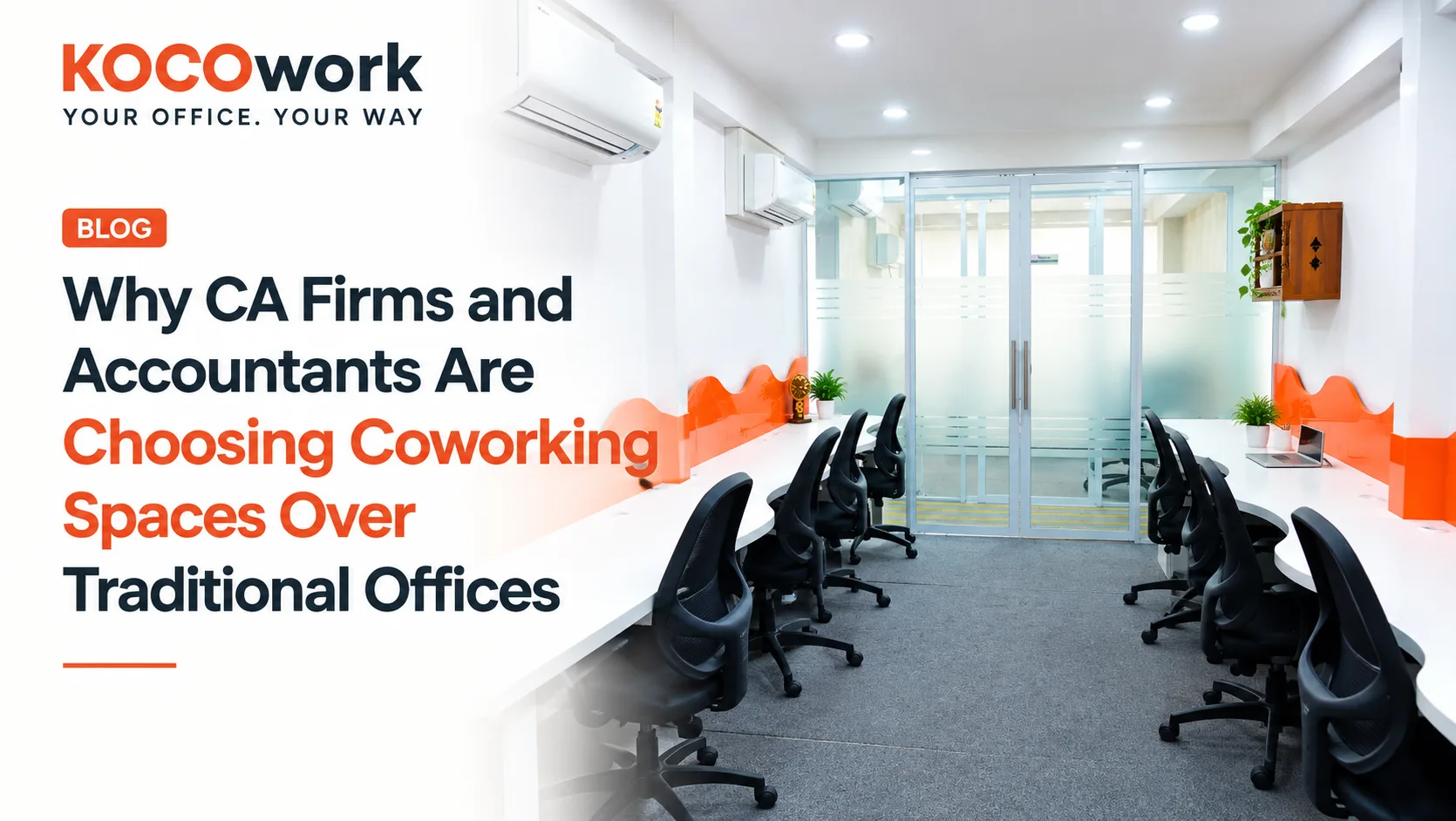
Chartered accountants and small accounting firms have historically been among the most conservative adopters of new ways of working. The profession runs on trust, precision, and a certain amount of institutional formality — qualities that, on the surface, seem to point toward a traditional office rather than a shared coworking floor. And yet, across Hyderabad and beyond, a growing number of CA practitioners and small accounting firms are doing exactly that: moving out of conventional offices and into coworking spaces.
This isn’t a contradiction. It’s a sign that coworking has matured enough to meet the specific, exacting needs of a profession that doesn’t compromise easily.
The Traditional CA Office Model Was Never About the Office
For most of the profession’s history, a CA’s office existed for a narrow set of reasons: a place to meet clients, a place to store physical records, and a professional address for registration and correspondence. None of those reasons actually require a dedicated, permanently leased space — they require access to a professional environment when it’s needed, and a credible address at all times.
Once that distinction becomes clear, the traditional office model starts to look like it was solving the problem in the most expensive way available, simply because it was the only model that existed for a long time. A modern CA practice — particularly a solo practitioner or a small firm of two to five people — often doesn’t need a permanent, fully furnished office running five or six days a week. It needs client-meeting-ready space on the days clients actually come in, and a serious, reliable base the rest of the time.
Much of the actual work in a modern accounting practice — reviewing filings, preparing statements, managing compliance calendars, communicating with clients over email and phone — doesn’t inherently require a private office at all. It requires a quiet, reliable place to focus. The parts that do require something more specific — client sittings, confidential document review, sensitive conversations — are precisely the parts a coworking setup with private cabins and bookable meeting rooms is built to handle.
What CA Firms Actually Need From a Workspace
A credible, professional address. For registration, correspondence, and simply appearing established to clients and regulatory bodies, the business address matters — and a coworking space’s registered address typically satisfies this as well as, or better than, a small standalone office in a less prominent location.
Private, closed-door space for sensitive conversations. Accounting work involves confidential financial information almost by definition. A private cabin — rather than an open desk — gives CA practitioners the privacy client conversations and document handling genuinely require, without needing to lease an entire floor to get it.
Reliable infrastructure without the management burden. Internet that doesn’t drop during a filing deadline, consistent power, and a professional environment that doesn’t require the practitioner to personally manage vendors, housekeeping, or maintenance — all of which pull time and attention away from actual client work.
Meeting rooms for client sittings. Much of a CA’s client-facing work — reviewing documents, discussing filings, walking through financial statements — benefits enormously from a proper meeting room rather than a cramped desk or an improvised space. Being able to book one only when needed, rather than maintaining one permanently, is a significant efficiency gain for a smaller practice.
Flexibility around tax season. Accounting work is famously seasonal — quiet stretches followed by intense filing periods. A traditional lease charges the same rent in April as it does in December, regardless of how the practice’s actual workload and staffing needs fluctuate. Coworking, especially with day passes or short-term desk additions, lets a firm scale its footprint up during peak season without carrying that cost year-round.
A location clients can actually reach. Many CA clients are small businesses and individuals based locally, not corporate clients willing to travel across the city for a filing conversation. A workspace situated within the same South Hyderabad corridor as the practice’s client base removes a friction point that a distant, prestige-address office in another part of the city doesn’t solve, however impressive it looks on paper.
The Cost Logic Specifically for Small Practices
Solo CAs and small firms operate on tighter margins than the client relationships often suggest. A young practitioner building a client base, or a small firm of two or three partners, rarely has the cash flow to justify a multi-year lease, a security deposit, and full office fit-out — not when the actual client-facing need might only require a proper room a few days a week.
Coworking removes that mismatch. A CA can start with a single dedicated desk or a small private cabin, add a second desk when a junior associate joins, and book meeting rooms only for the days actual client sittings are scheduled — matching cost directly to the practice’s real, current size rather than a guess about where it might be in three years.
This matters particularly for practitioners in their first few years of independent practice, when client volume and revenue are still building and every fixed cost carries more risk than it would for an established firm. A workspace model that scales alongside the practice — rather than requiring a multi-year bet made upfront — removes one of the more common sources of financial strain for young CAs setting out on their own.
Professionalism Without the Overhead
One resistance point CA firms often raise about coworking is a concern about professionalism — will clients take a practice seriously if it operates out of a shared building rather than a standalone office? In practice, this concern has faded considerably as coworking spaces themselves have become more polished, more common, and more normalized across professional services generally.
A well-designed private cabin, a proper meeting room booked for a client sitting, and a credible business address collectively deliver the professional impression a client expects — arguably more consistently than a small, independently managed office that may show its age or lack of investment over time. Clients are, in most cases, far more focused on the quality of the advice and the professionalism of the interaction than on whether the practitioner’s name is on the building’s lease.
If anything, the shared building itself can work in a small practice’s favor. A polished, well-maintained coworking facility with a proper reception, clean common areas, and a professional meeting room often presents better to a walk-in client than a standalone office a solo practitioner has had neither the time nor the budget to fully maintain and update over the years.
What This Shift Signals for the Profession More Broadly
The move toward coworking among CA firms and accountants reflects something larger happening across professional services: a recognition that the physical trappings of a traditional office were never actually the source of a firm’s credibility. Credibility comes from expertise, reliability, and the quality of client relationships — none of which require a permanently leased floor to demonstrate.
As more accounting professionals make this shift, it’s likely to become less of a notable decision and more of a default one, particularly for practitioners starting out or running lean, focused practices without the overhead of a larger legacy firm.
A Fit for South Hyderabad’s Growing CA Community
For CA firms and accountants based in or serving clients across South Hyderabad — Champapet, LB Nagar, Saroornagar, and the surrounding corridor — a coworking setup offers a genuinely practical alternative to a traditional office lease: private cabins for confidential client work, bookable meeting rooms for sittings, a professional registered address, and the flexibility to scale desk-by-desk as the practice grows.
KOCOwork in Champapet offers private cabins and meeting rooms suited specifically to this kind of client-facing professional practice. Book a tour to see whether a flexible setup fits how your practice actually operates.